

Why it happens
Why some children stick to four foods
From around 18 months, many children become wary of new or changed food. Researchers call this food neophobia, and it tends to be strongest between about 2 and 6 years old. Growth also slows after the first birthday, so appetite naturally drops and becomes more up and down.
Several things often narrow a child's menu at the same time:
Caution with new food
Unfamiliar colours, smells and textures feel risky. Familiarity is what makes food feel safe.
Food jags
A child wants the same food, made the same way, for days or weeks, then may suddenly drop it.
Need for predictability
Some children like food that always looks and tastes identical, such as a particular brand of crackers.
Pressure at the table
Coaxing and bargaining usually make children more cautious, not less, even when it is kindly meant.
The American Academy of Pediatrics and the NHS both describe fussy eating as a common stage and recommend calm, repeated offers rather than pressure.
The bridge method
What food chaining is, and how to start
Food chaining starts with a food your child already eats well, then changes one small thing at a time: the shape, the brand, the flavour, the temperature or the texture. Each step is close enough to the last one that it still feels familiar.
It is not about hiding vegetables inside safe foods. Hidden food can make a child suspicious of their safe foods if they notice. The aim is for your child to knowingly get used to something a little different.
| Start with | Small step | Next step | Later |
|---|---|---|---|
| Plain buttered pasta | Same pasta, different shape | A little grated cheese on top | A spoonful of tomato sauce on the side to dip |
| One brand of crackers | Same brand, different shape | A different brand of a similar cracker | A rice cake or thin toast fingers |
| Shop-bought chicken nuggets | Another brand of nuggets | Homemade breaded chicken strips | Plain chicken strips with the breading on the side |
| Apple slices, peeled | Thin slices with the skin on | A different apple variety | Thin pear slices |
Tip: stay on each step for several days, or longer, until your child eats it happily. If a step is refused a few times in a row, go back one step and make the next change smaller.
No-pressure exposure
How new foods become familiar
Children often need to see and try a new food many times, often 8 to 15 times or more, before they accept it. Every calm contact counts, even if nothing is eaten.
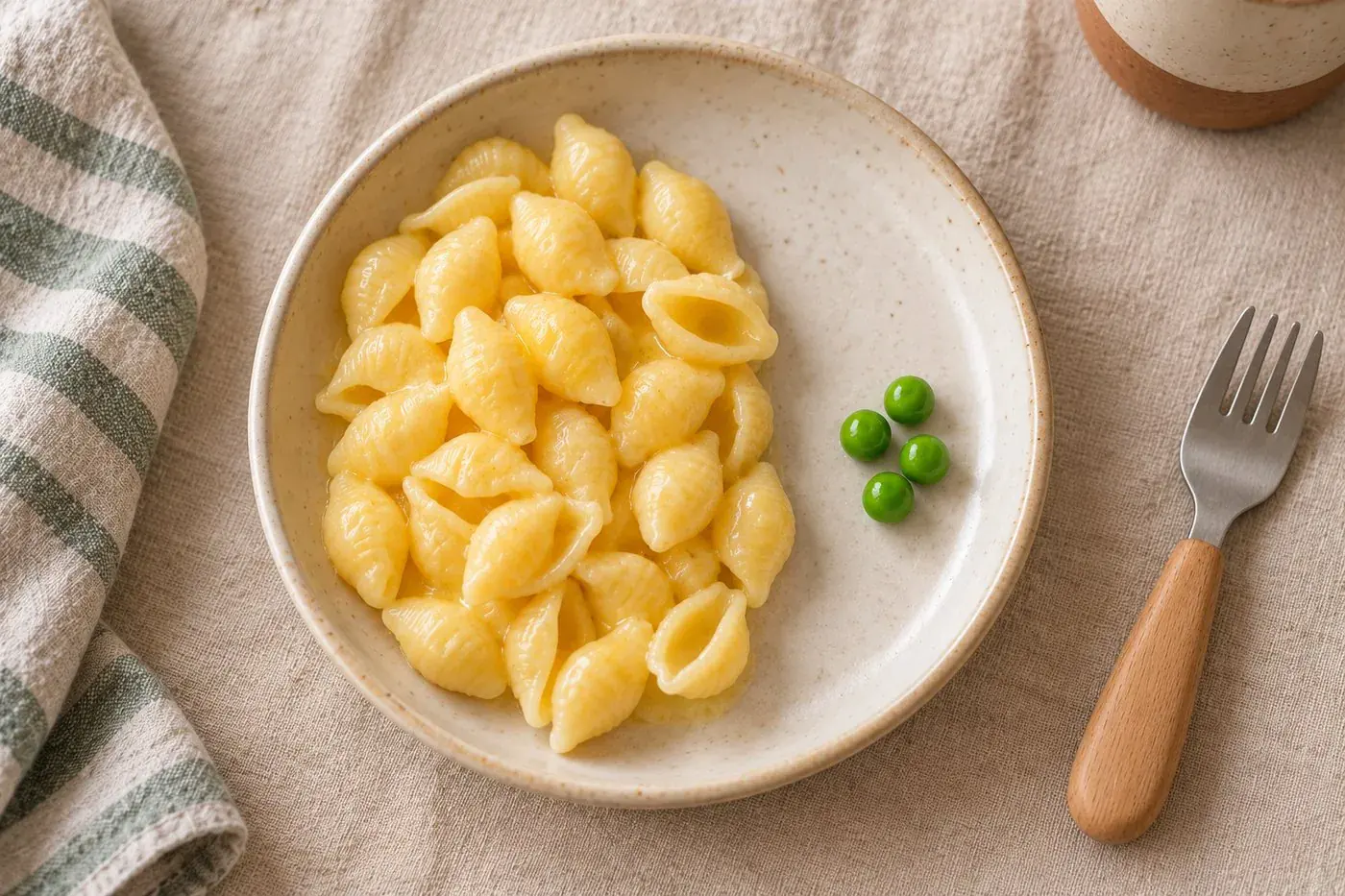
- Put it on the table
A new food in a bowl in the middle of the table is a first step. Your child can simply look at it.
- Put a tiny amount on their plate
One pea, one small piece, next to their safe food. Say nothing about it.
- Let them explore
Touching, smelling, licking or putting it in and taking it out again are all progress. Offer a napkin or "all done" bowl so spitting out is allowed.
- Eat it yourself
Children learn from watching you enjoy food. Talk about the taste, not about whether they should eat it.
- Try again another day
Offer the same food again within the next week. A refusal today is information, not a final answer.
Food play away from mealtimes also helps: washing vegetables, stirring, or building faces with fruit on a plate lets children get used to food with nothing at stake.
Putting it together
A week of calmer meals
You do not need a separate children's menu. Serve one family meal, and make sure each plate has something your child can eat.
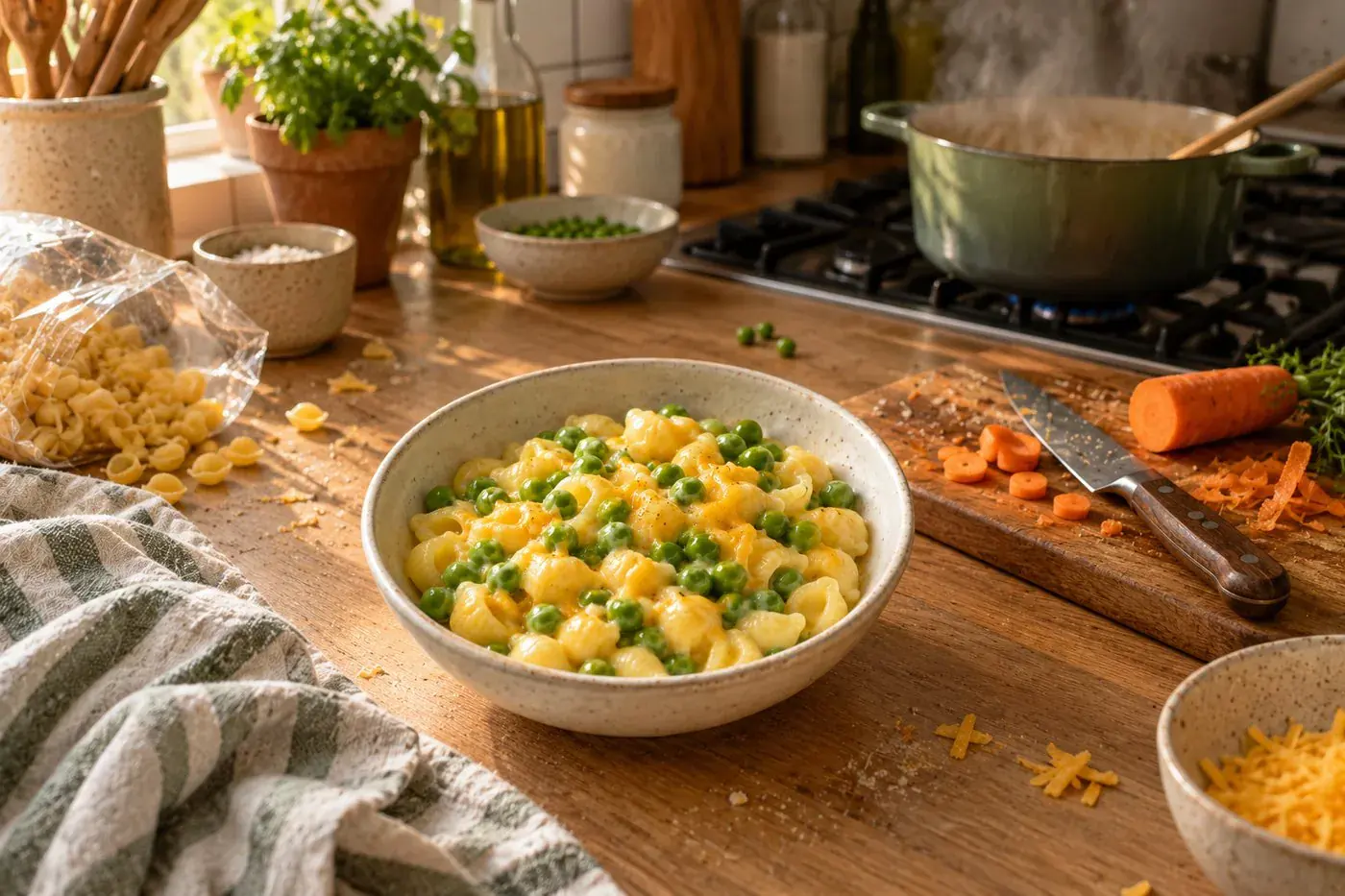
| Day | Family meal | Safe food on the plate | Tiny new bit |
|---|---|---|---|
| Mon | Pasta with tomato sauce | Plain pasta | 1 tsp sauce to dip |
| Tue | Chicken, rice and carrots | Rice | 1 carrot stick, cooked soft |
| Wed | Omelette and toast | Toast fingers | A small strip of omelette |
| Thu | Fish fingers, potatoes, peas | Potatoes | A few peas |
| Fri | Wraps with cheese and chicken | Plain wrap | A little grated cheese |
| Sat | Soup and bread | Bread | A spoon of soup to taste |
| Sun | Roast dinner | Potatoes | A small piece of chicken |
For more on keeping meals low-pressure, see the pressure-free table and judge the week, not the plate.
Words that help
What to say at the table
Try saying
- "You don't have to eat it. It can stay on your plate."
- "This one is crunchy. This one is soft."
- "You can have more pasta when you're ready."
- "Are you all done? Okay, you can go and play."
Try to avoid
- "Just one bite and then you can have pudding."
- "You loved this last week!"
- "You're such a fussy eater."
- "You're not leaving until your plate is clean."
Share these phrases with partners, grandparents and childminders, so your child hears the same calm message from everyone.
Safety first
Before you try new foods
- Prepare new foods in safe shapes for your child's age: quarter grapes lengthwise, cut sausages into strips, and cook hard vegetables until soft.
- Always have your child sitting down and supervised while eating.
- If your child has a known or suspected food allergy, speak to your GP or allergy team before introducing new foods.
More detail: allergies and choking hazards.
When a short food list needs professional advice
Speak to your GP, health visitor or paediatrician if your child:
- is losing weight, not growing as expected, or seems very tired or unwell
- eats fewer than about 15 to 20 foods, and the list keeps shrinking
- gags, chokes, coughs or vomits often when eating, or finds chewing and swallowing hard
- refuses whole food groups, such as all fruit and vegetables or all protein foods
- becomes very distressed around new food, or eating problems are affecting family life, nursery or school
These can be signs of a feeding difficulty such as ARFID (avoidant/restrictive food intake disorder), which is treatable with the right support. A referral to a dietitian, speech and language therapist or feeding team may help.
FAQ
Common questions
Should I make a separate meal for my child?
Try not to. Serve the family meal and include at least one food your child usually eats. That way nobody goes hungry, and your child keeps seeing other foods without pressure.
Is it okay to hide vegetables in their food?
Adding vegetables to family recipes is fine, but try not to rely on hiding them. If a child discovers a hidden food, they may start to distrust their safe foods. Children also need to see and learn about vegetables to accept them.
Should I give a multivitamin?
In the UK, the NHS recommends vitamin drops containing vitamins A, C and D for children aged 6 months to 5 years. If your child eats a very limited diet, ask your GP or health visitor whether anything else is needed.
How long will this phase last?
It varies. Many children become more open to new foods between 5 and 7 years old, especially with calm, repeated exposure. Progress is usually slow and uneven, so look at the direction over months rather than day to day.
What if they eat nothing at dinner?
That is okay once in a while. Healthy children tend to balance their intake over several days. Keep the next meal or snack at its usual time, rather than offering extra food in between.
Sources
Where this guide comes from
- American Academy of Pediatrics (HealthyChildren.org): Picky eaters
- NHS: Fussy eaters
- CDC: Picky eaters and what to do
- NHS: Vitamins for children
- NHS: Eating disorders, including ARFID
This guide is general information, not medical advice. If you are worried about your child's eating, growth or health, speak to a qualified professional who knows your child.
The more you bundle, the more you save.
Add ebooks to your cart and the discount applies automatically at checkout - no code to remember, mix and match any titles.
Pick any two ebooks and the discount is applied automatically in your cart.
Build a fuller shelf and the discount steps up - still no code needed.
Add a fourth ebook to your cart and one of them is on us.
Bundle pricing is calculated from the ebooks in your cart at checkout - the discount or free ebook is applied automatically once your cart qualifies.