

In the moment, do less
Stay close, keep everyone safe, and say little. The AAP recommends acknowledging the feeling out loud, then waiting out the peak: reasoning mid-meltdown does not land because the thinking brain is offline. Boundaries still hold; lectures wait.
Teach the skill after the storm
Once calm, reconnect before you correct. Name what happened, practice one coping tool together - slow breaths, squeezing a pillow, asking for a break - and praise its use next time. Skills rehearsed calm get used upset.
Catch it before it starts
Most meltdowns have a runway: hunger, tiredness, long transitions, overstimulation. UNICEF's parenting resources stress the same prevention logic across ages - meet the need early and the feeling stays manageable.
Go deeper
On this shelf
- Nora and the Thunder in Her Chest (story)
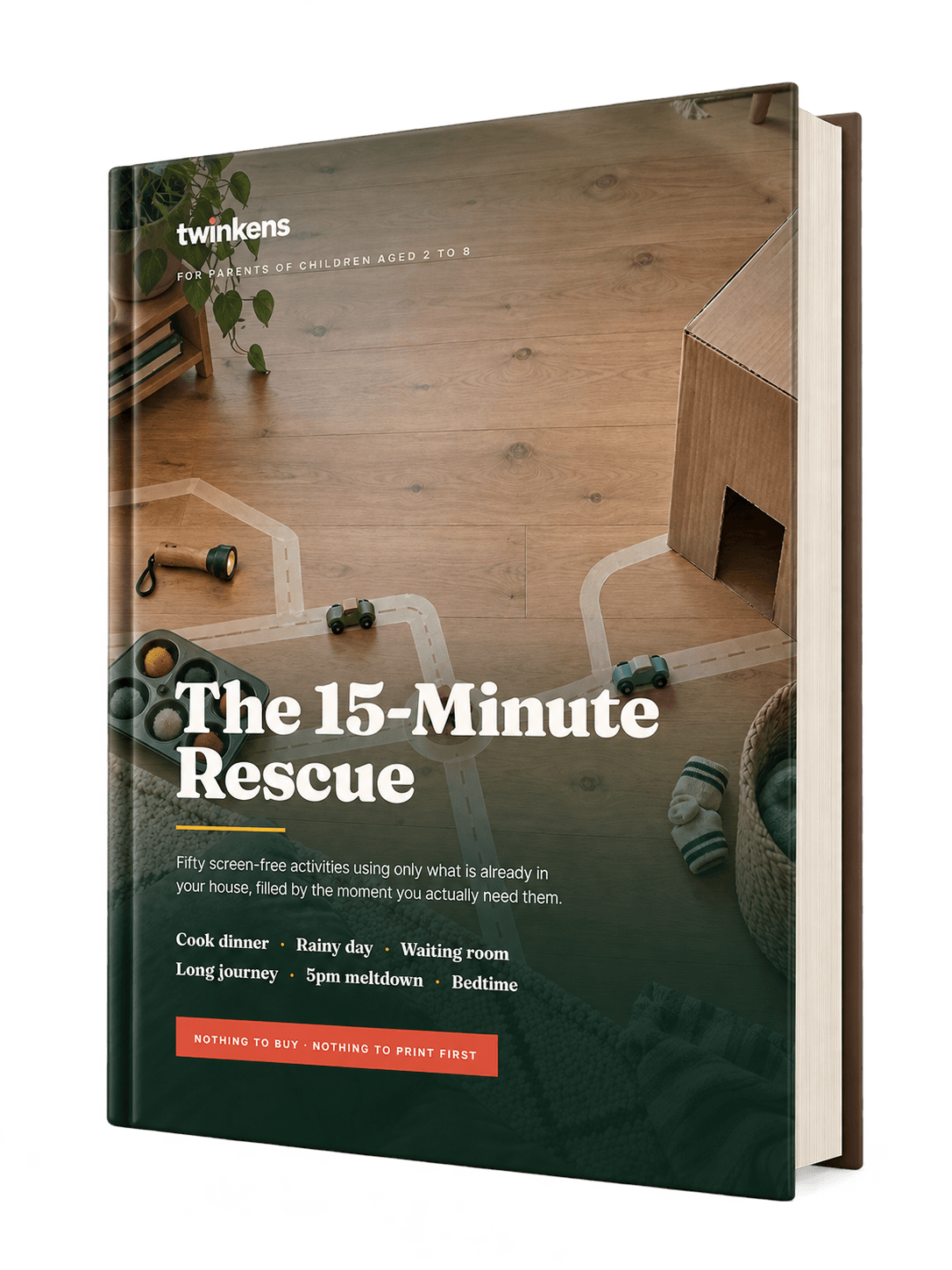
- The 15-Minute Rescue: regulation activities
- The Twinkens shelf: all titles
Sources
