“My child eats a very short list.”
Start with structure, familiar foods, repeated low-pressure exposure and whether the eating pattern is simply selective or causing broader concern.
Picky eating basics →
Search ebooks, guides, stories and parenting topics.
Parenting topic · Feeding & mealtimes
Feeding gets complicated when nutrition advice, picky eating, food safety and everyday family life all collide. Start with the problem in front of you: introducing foods, reducing mealtime pressure, planning family meals or deciding when a feeding concern needs professional help.

If dinner is hard tonight
Tonight does not need to become a nutrition project. Keep the meal safe, familiar enough to approach and free of bargaining over bites.
When practical, include at least one food your child is already comfortable with alongside the rest of the meal.
Encourage without forcing. Let the child decide whether and how much to eat from what is offered.
Foods can be offered again at future meals without turning tonight’s refusal into a battle.
Start with the actual problem
Feeding problems are not interchangeable. Choose the path that best matches the task your family is trying to solve.
Start with structure, familiar foods, repeated low-pressure exposure and whether the eating pattern is simply selective or causing broader concern.
Picky eating basics →Use age- and development-appropriate textures, responsive feeding and current food-safety guidance rather than a rigid food-order rule.
First foods & textures →Simplify the planning system: repeat useful ingredients, rotate familiar meals and reduce the number of dinner decisions made at 5 p.m.
Family meal planning →Food shape, texture and supervision matter. Suspected allergy, swallowing difficulty or growth concerns need individualized professional advice.
When to get more help →Four principles that travel across ages
The details change with age, but four ideas remain useful: safe food, predictable structure, responsive feeding and variety over time.
Use shapes, textures and preparation methods appropriate to the child’s developmental stage, and supervise young children while they eat.
Regular meals and snacks create more predictability than grazing all day or negotiating a new menu after every refusal.
Notice hunger and fullness cues. Encourage eating without forcing a child to finish or take a prescribed number of bites.
One meal does not need to contain every food group perfectly. Variety is built across repeated meals and repeated opportunities.
Picky eating
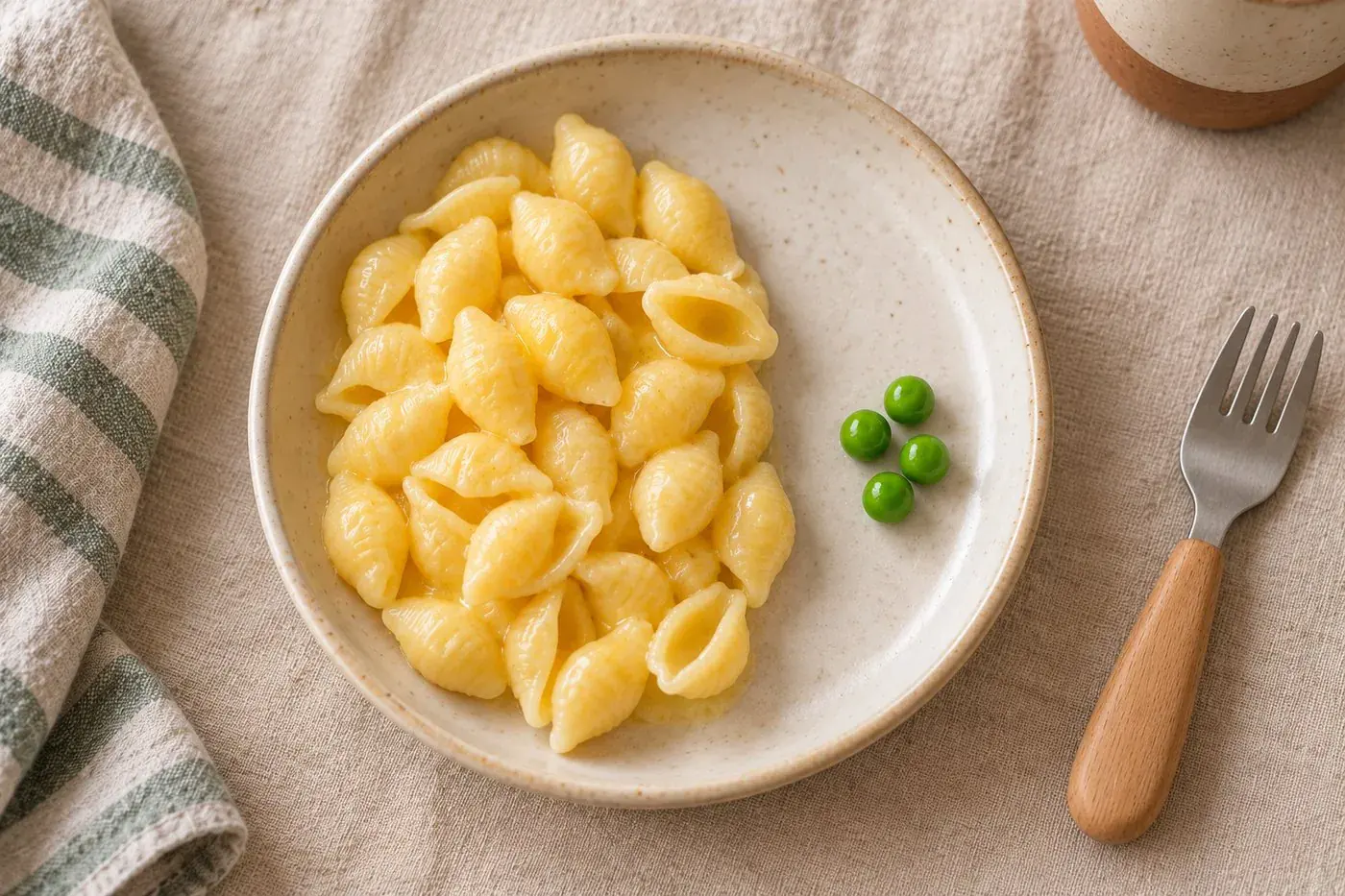
Young children may refuse foods they previously ate, prefer a small number of foods or need repeated opportunities before they accept something new. That can be frustrating without automatically meaning something is medically wrong.
CDC and AAP guidance supports repeated exposure, modeling and offering new foods alongside foods a child already accepts. The practical goal is not to “win” one dinner—it is to keep the child participating in meals while gradually widening experience with food.
A Twinkens mealtime memory aid
A five-part way to remember the basics when family feeding starts to feel like a negotiation.
P.L.A.T.E. is a Twinkens editorial framework for organizing general feeding guidance. It is not a medical, dietetic or feeding-therapy protocol.
Match shape and texture to development, seat young children safely and supervise eating.
Notice hunger and fullness instead of requiring a child to clean the plate or finish a fixed number of bites.
Keep familiar foods in the picture while continuing to offer different tastes and textures.
A refusal today does not have to become a permanent food rule. Re-offer without turning exposure into pressure.
Shared meals give children a chance to see other people eating the same family foods without making performance the focus.
First foods & textures
WHO recommends introducing safe, nutritionally adequate complementary foods from around 6 months while continuing breast milk as appropriate. CDC also emphasizes moving through textures as a child’s eating skills develop.
Begin complementary foods when developmentally ready. Start with small amounts and appropriate soft textures.
Move gradually from smooth or mashed foods toward thicker, lumpier and more textured foods as skills develop.
Offer a diverse range of nutrient-dense foods instead of relying on one narrow type of food or texture.
Pay attention to hunger and fullness cues. Complementary feeding should not mean overriding the child’s signals.
Food safety
The same ingredient can be safer or riskier depending on how it is prepared and served.
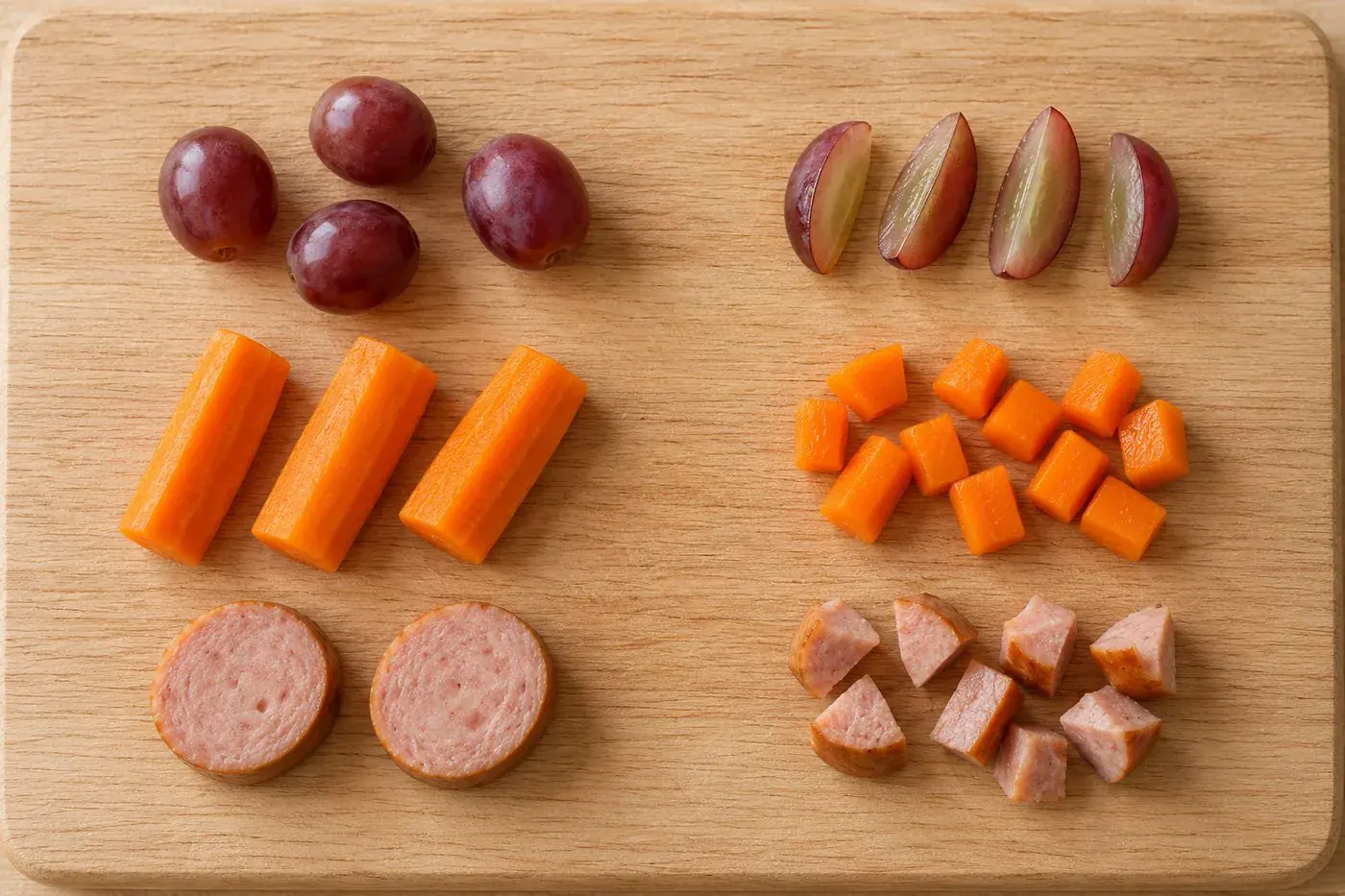
Avoid small, hard, sticky or difficult-to-chew foods for young children, and modify foods into developmentally appropriate shapes and textures.
Young children should be seated upright for meals and snacks rather than eating while walking, playing, lying down or riding in a moving car.
Stay with young children while they eat. Food-safety guidance cannot replace adult supervision in the individual situation.
CDC advises against honey before 12 months because of the risk of infant botulism.
Whole nuts and other hard round foods are choking hazards. Allergen introduction must still use an age-appropriate form.
If a baby has severe eczema or an egg allergy, current guidance recommends talking with a clinician about how and when to introduce peanut-containing foods.
Family meal planning
A useful meal plan does not need thirty completely different dinners. Repeat ingredients, rotate meals and keep a few reliable options so the system is easier to shop for and repeat.

Plan one week or another manageable period instead of trying to solve the whole month every Sunday.
Choose ingredients that can appear in several meals so shopping and food waste are easier to manage.
A few realistic fallbacks are more useful than assuming every planned dinner will happen exactly as written.
Meal planning can organize what adults offer. It cannot guarantee how much a child will eat or whether they will accept a specific food.
When feeding needs individualized care
Contact a pediatrician, dietitian, feeding specialist or another appropriately qualified professional if you are worried about growth, nutrition, swallowing, allergy or a feeding pattern that is causing significant distress or functional problems.

A digital family meal-planning system built around a short repeat shopping list, a four-week meal rotation and practical printables. It is designed to reduce dinner decisions—not to promise that a child will accept a specific food or to replace individualized nutrition advice.
Sources & editorial standard
Food safety, infant feeding, allergies, growth and nutrition are health topics. Twinkens sources factual guidance to recognized clinical and public-health organizations and keeps general meal-planning advice clearly separate from individualized care.
Related topics
Start with the mealtime problem that costs your family the most energy, change one part of the setup and build from there.
Add ebooks to your cart and the discount applies automatically at checkout - no code to remember, mix and match any titles.
Pick any two ebooks and the discount is applied automatically in your cart.
Build a fuller shelf and the discount steps up - still no code needed.
Add a fourth ebook to your cart and one of them is on us.
Bundle pricing is calculated from the ebooks in your cart at checkout - the discount or free ebook is applied automatically once your cart qualifies.
Download the Twinkens Android app for warm, screen-free stories children will love.
Download on Google Play