“We cannot get out the door.”
Reduce the number of things a child has to remember at once and move more of the routine into visible cues and fixed locations.

Search ebooks, guides, stories and parenting topics.
Parenting topic · ADHD & neurodiversity
A child can know what to do and still struggle to start, remember, switch, organize or stop. This hub focuses on practical support for everyday family life-without turning every difficult moment into a diagnosis.

Neurodiversity is not a diagnosis. It describes variation in how people think, learn and interact. ADHD is a specific neurodevelopmental condition. This page focuses mainly on ADHD-related family support; it should not treat ADHD, autism, dyslexia, sensory differences or other neurodevelopmental profiles as interchangeable.
Start with the friction point
Choose the everyday task that keeps breaking down. You do not need to decide whether every difficulty is “because of ADHD” before making the environment clearer.
Reduce the number of things a child has to remember at once and move more of the routine into visible cues and fixed locations.
Experiment with where, when and how the work begins. Shorter chunks and clearer first steps may be more useful than repeated reminders.
Make the endpoint visible, preview what comes next and reduce the number of instructions given during the transition itself.
Put important information outside the child’s memory: lists, labels, launch pads, timers and one predictable home for recurring items.
Understand ADHD carefully

ADHD can involve persistent patterns of inattention and/or hyperactivity-impulsivity that interfere with everyday functioning. Children may struggle with things such as remembering, waiting, organizing, resisting impulses or staying with tasks-but an individual child’s profile can look very different from another’s.
There is no single test that diagnoses ADHD. Other problems-including sleep difficulties, anxiety, depression and learning differences-can sometimes look similar. A proper assessment considers the child across settings such as home, school and social life.
If you are wondering about a diagnosis, the useful next step is an appropriate professional assessment-not an online checklist by itself.
A Twinkens memory aid
A practical way to remember how to reduce everyday friction before asking a child to “try harder.”
E.A.S.E. is a Twinkens editorial framework for organizing general support ideas. It is not ADHD treatment, behavior therapy or a validated clinical protocol.
Use visible checklists, labels, calendars, launch pads and reminders instead of relying on repeated verbal prompts.
Short, concrete directions can be easier to act on than a chain of four instructions delivered at once.
Reduce unnecessary steps, clutter and choices around the task that already requires the most effort.
Use realistic goals and specific positive feedback rather than waiting for a perfect result before noticing effort.
At home
Structure is not about making a child’s life rigid. It is about moving recurring demands out of working memory and into the surroundings.
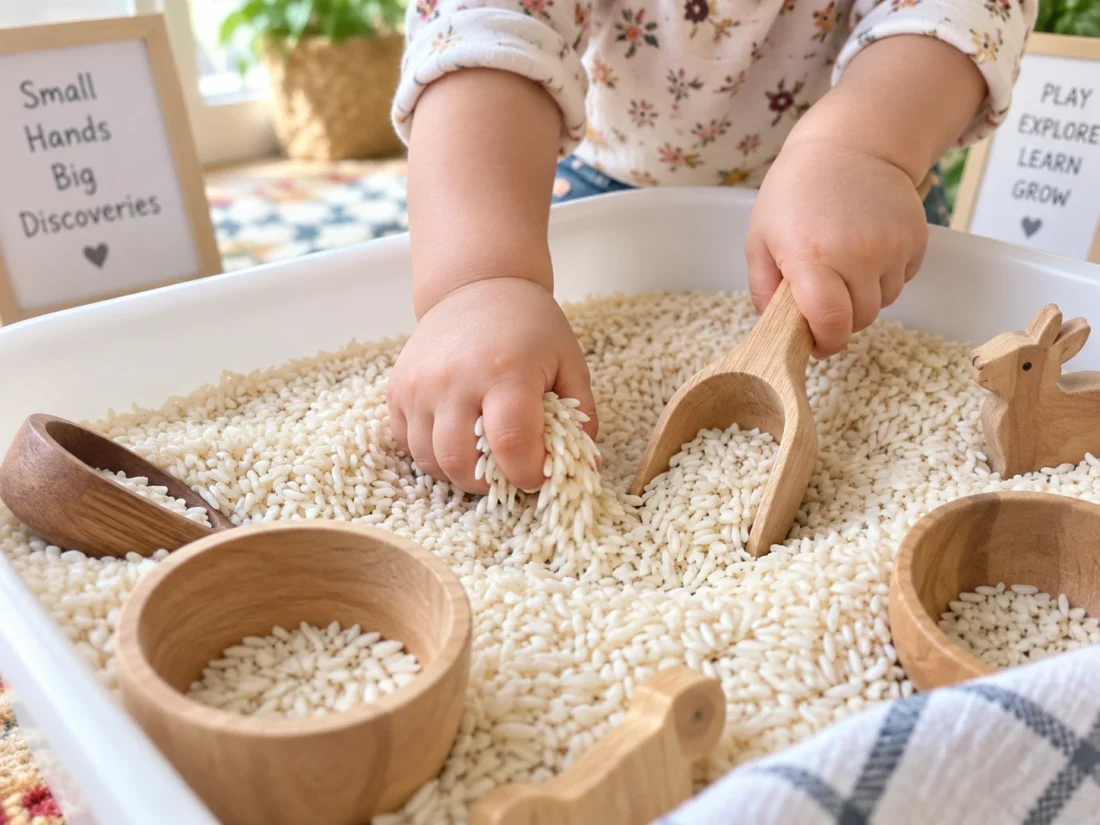
Give school bags, shoes, keys, forms and recurring essentials one obvious home near the point of departure.
A two- or three-step checklist can be easier to follow than hearing the same reminder several times.
When a choice is appropriate, offer two workable options instead of an open-ended decision that adds another task.
“Clean your room” may contain many hidden steps. Start with one concrete action such as putting clothes in the basket.
Specific feedback close to the behavior can be easier to connect than a reward or consequence that arrives much later.
Some children work better in quiet; others do better with a parent nearby or a little background activity. Test the setup instead of assuming one environment fits everyone.
Example: reduce the morning memory load
This is an example of environmental support, not a prescription. The goal is to make the sequence easier to see and repeat.
Bag and recurring school items go to the same launch pad.
Use three visible steps: dressed → breakfast → teeth, rather than repeated verbal chains.
Before shoes go on, check the launch pad instead of asking the child to remember each item separately.
If the same step fails every day, change that step’s environment before adding another reminder.
Homework & tasks
Be careful with
Home and school
ADHD can affect more than one setting, and school observations can be important both during assessment and after diagnosis. Focus communication on specific tasks and patterns rather than broad labels such as “not trying.”
“Work is completed but not turned in” is more actionable than “disorganized.”
Note which prompts, seating arrangements, visual cues or check-ins actually improve the task.
A pattern that appears at school, home and activities tells a different story from a difficulty that happens only in one context.
Depending on the country and child’s needs, schools may offer accommodations, educational interventions or individualized support plans.
About neurodiversity
Neurodiversity language can help families talk about variation without treating one way of thinking or learning as the only correct one. At the same time, ADHD can create real impairment and some children need clinical, educational or behavioral support.
Talk about the task that is hard and the support that helps. Children also have strengths, interests and contexts in which they function very well.
The term is broad. ADHD, autism, dyslexia and other conditions have different diagnostic criteria and support needs.
Support is more useful when it includes the child’s experience rather than being designed entirely around adult convenience.
Diagnosis & treatment
If you think your child may have ADHD, diagnosis is a multi-step professional process. Treatment decisions depend on age, severity, impairment, coexisting conditions, family circumstances and the individual child.
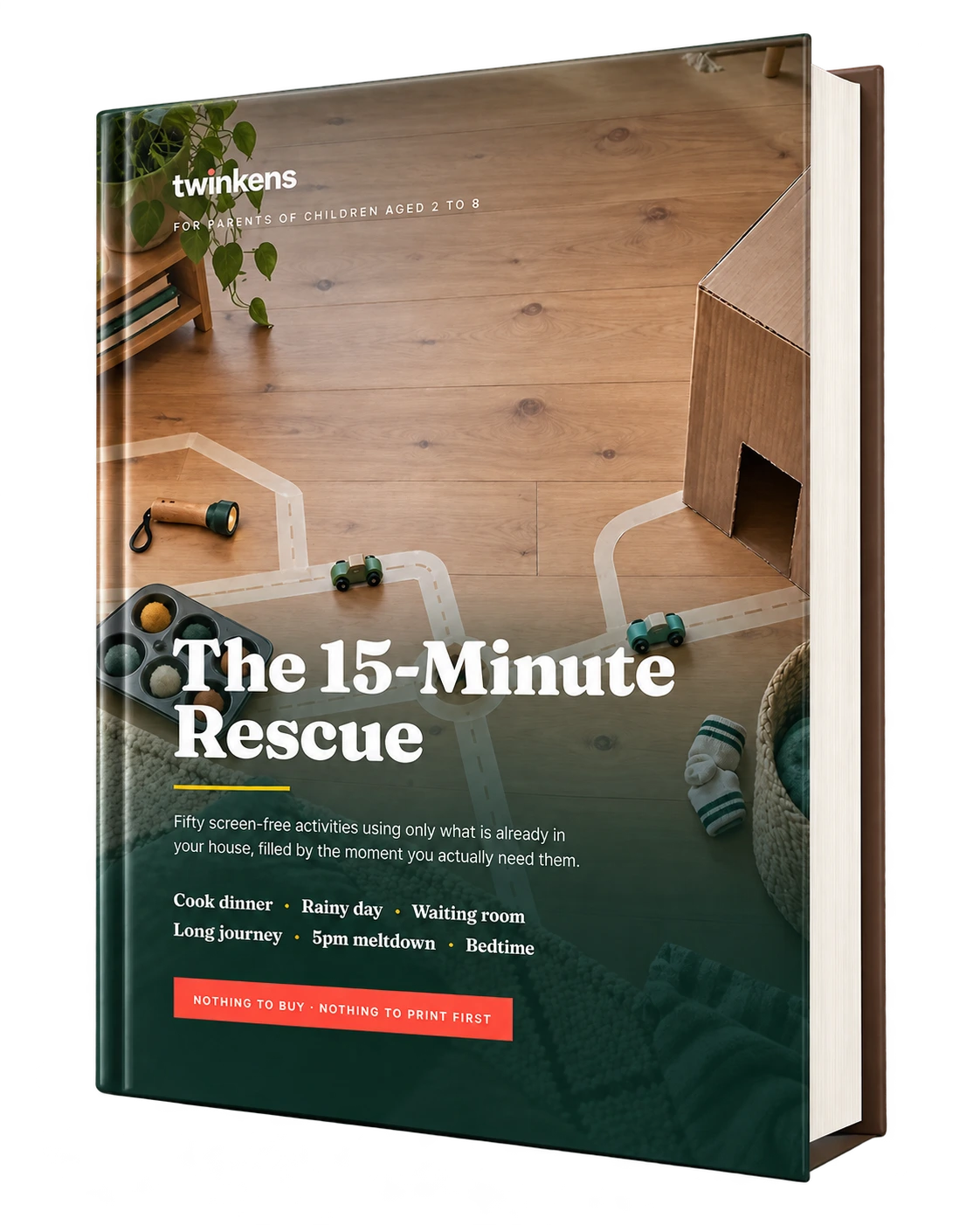
This screen-free activity book is not an ADHD resource or treatment. It can still be useful when a family simply wants ready-to-use activity ideas for waiting, cooking, travel, rainy days, late-afternoon overload or bedtime.
Sources & editorial standard
ADHD is a neurodevelopmental health topic. Diagnostic, treatment and impairment claims should be sourced to clinical or public-health guidance. Twinkens practical frameworks must remain clearly labeled as editorial tools rather than clinical interventions.
Related topics
Choose the recurring point of friction, reduce one layer of memory or organization, and see whether the environment can do more of the work.
Add ebooks to your cart and the discount applies automatically at checkout - no code to remember, mix and match any titles.
Pick any two ebooks and the discount is applied automatically in your cart.
Build a fuller shelf and the discount steps up - still no code needed.
Add a fourth ebook to your cart and one of them is on us.
Bundle pricing is calculated from the ebooks in your cart at checkout - the discount or free ebook is applied automatically once your cart qualifies.