
Why appetite changes
Growth slows down after the first birthday
Babies grow very fast in their first year. After that, growth slows, and so does appetite. The American Academy of Pediatrics notes that toddlers' appetites can vary a lot from meal to meal and day to day.
Big day, small day
A child may eat a lot on Monday and very little on Tuesday. Over the week, it usually evens out.
Busy bodies
Tiredness, excitement, illness and teething can all reduce appetite for a few days.
Growth spurts
Some weeks your child may seem hungry all the time. That is normal too.
Milk and snacks
Lots of milk, juice or grazing between meals can leave little room for dinner.
Portion sizes
What a toddler portion actually looks like
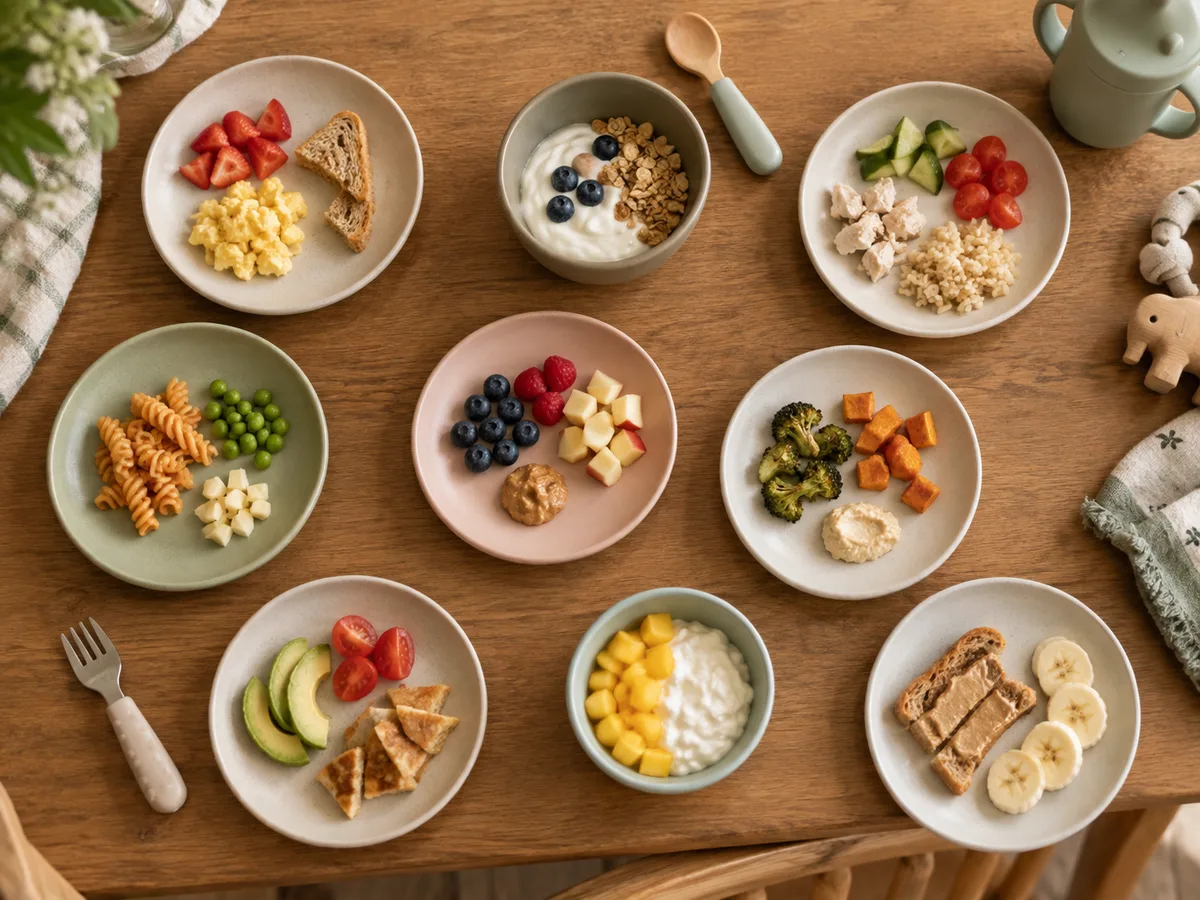
A toddler's portion is much smaller than an adult's, often about a quarter to a half of an adult portion. A useful starting point used by many dietitians is roughly one tablespoon of each food per year of age, then more if your child is still hungry.

| Food | Example portion for a 2 to 3 year old |
|---|---|
| Pasta or rice | 2 to 3 tablespoons, cooked |
| Bread | Half a slice to 1 slice |
| Vegetables | 1 to 3 tablespoons, or a few small pieces |
| Fruit | Half a small apple, or a small handful of berries |
| Meat, fish or beans | 1 to 2 tablespoons |
| Yoghurt | A small pot |
These are rough guides, not targets. Children's needs vary with their size, age and how active they are.
Balance
Variety across the week, not perfection on a plate
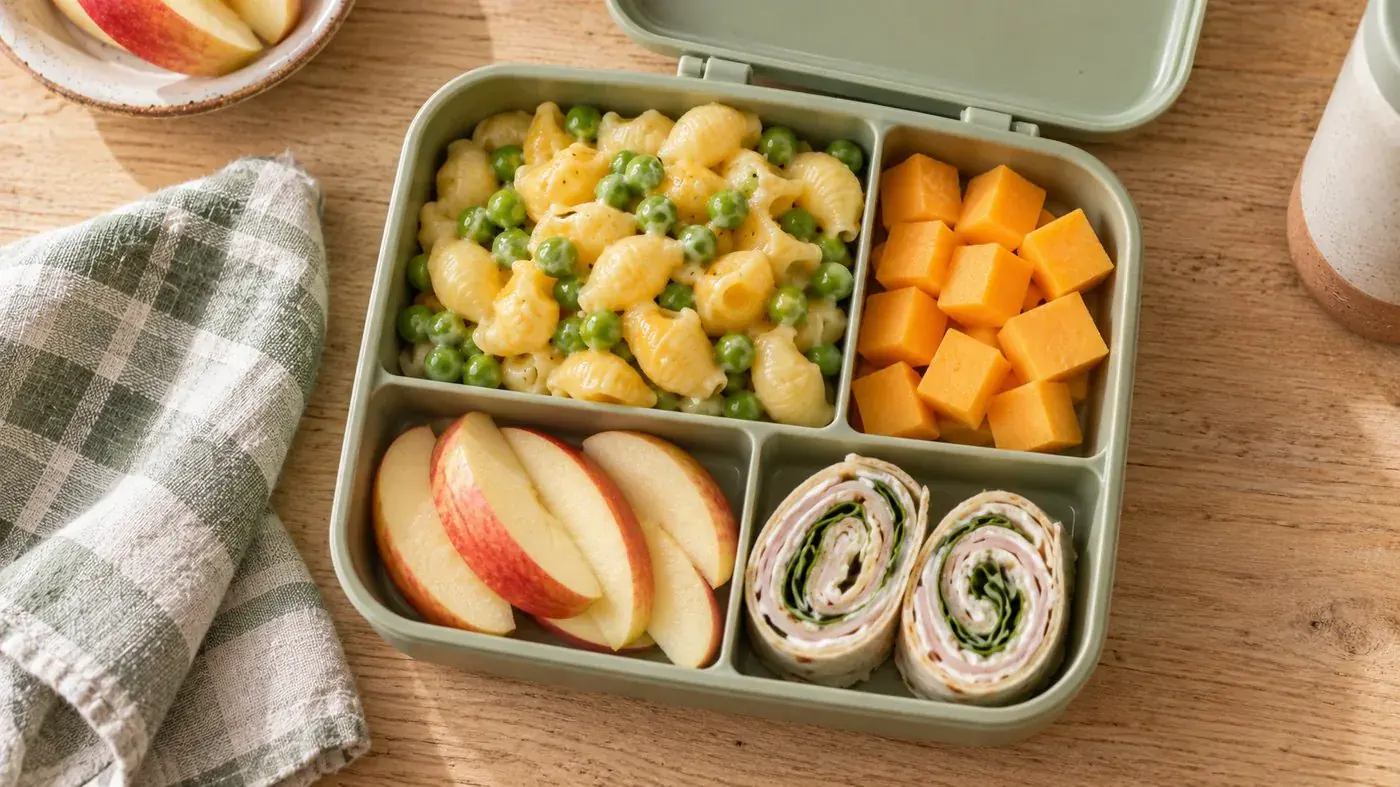
The NHS suggests young children eat a mix of these food groups each day. If one day is patchy, the next few days often make up for it.
Fruit and vegetables
Aim for 5 child-sized portions a day. A child's portion is roughly what fits in their hand.
Starchy foods
Bread, rice, pasta, potatoes and cereals give energy. Offer some at each meal.
Protein foods
Meat, fish, eggs, beans, lentils and nuts (ground or as smooth butter, never whole).
Dairy
Milk, cheese and yoghurt. Around 350ml of milk a day, or dairy foods, is enough for most 1 to 4 year olds.
A simple weekly check
Instead of worrying about each meal, try ticking the food groups your child ate each day for a week.
| Day | Fruit or veg | Starchy | Protein | Dairy |
|---|---|---|---|---|
| Mon | ✓ | ✓ | ✓ | |
| Tue | ✓ | ✓ | ✓ | ✓ |
| Wed | ✓ | ✓ | ✓ | |
| Thu | ✓ | ✓ | ✓ |
A few gaps are normal. If a whole food group is missing week after week, that is worth mentioning to your health visitor or GP.
Three calm habits
Habits that help appetite settle
- Keep a rough rhythm
Three meals and two snacks, spaced 2 to 3 hours apart, help children arrive at meals hungry but not overtired.
- Offer water between meals
Too much milk or juice can fill a small stomach. From 12 months, offer milk in a cup rather than a bottle, and water to drink between meals.
- Let your child decide how much
You choose what, when and where food is served. Your child decides whether to eat and how much. Praise sitting together, not clean plates.
More on this approach: the pressure-free table.
Words that help
What to say when they barely eat
Try saying
- "Okay, your tummy is full. The next food is at snack time."
- "There's more if you're still hungry."
- "You can listen to your tummy."
Try to avoid
- "Three more bites."
- "You've hardly eaten anything!"
- "If you finish, you can have a treat."
When to talk to a health professional
Your health visitor or GP can check your child's weight and height against growth charts. Ask for a check if your child:
- is losing weight, or seems to be dropping across the lines on their growth chart
- is often very tired, pale, unwell or low in energy
- has ongoing constipation, diarrhoea, vomiting or tummy pain
- eats a very limited range of foods, or cuts out whole food groups
- drinks large amounts of milk and eats very little solid food
FAQ
Common questions
My toddler only eats one good meal a day. Is that okay?
This is very common. Many toddlers eat one bigger meal and pick at the others. If they are growing well and have plenty of energy, look at their intake across the whole day and week.
Should I offer a snack if they skipped dinner?
Try to keep to the usual next meal or snack time rather than offering extra food straight after. If bedtime is close, a simple, planned bedtime snack such as a banana or toast is fine.
How much milk is too much?
For children aged 1 to 4, around 350ml of milk a day (or equivalent dairy foods) is usually enough. Much more than this can reduce appetite for other foods and is linked to low iron levels.
How do I know my child is getting enough?
Signs include steady growth at health checks, plenty of energy, regular wet nappies or trips to the toilet, and normal bowel movements. Your health visitor can help if you are unsure.
Sources
Where this guide comes from
- NHS: What to feed young children
- American Academy of Pediatrics (HealthyChildren.org): Picky eaters
- CDC: Picky eaters and what to do
- World Health Organization: Infant and young child feeding
This guide is general information, not medical advice. Portion examples are rough guides only. If you are worried about your child's eating or growth, speak to a health professional.
The more you bundle, the more you save.
Add ebooks to your cart and the discount applies automatically at checkout - no code to remember, mix and match any titles.
Pick any two ebooks and the discount is applied automatically in your cart.
Build a fuller shelf and the discount steps up - still no code needed.
Add a fourth ebook to your cart and one of them is on us.
Bundle pricing is calculated from the ebooks in your cart at checkout - the discount or free ebook is applied automatically once your cart qualifies.